





A trickle vent is a small, controllable opening built into a window or door that allows a steady stream of fresh air to enter a room.
They provide background ventilation alongside other methods, such as extractor fans and opening windows for rapid ventilation. Although small, trickle vents can:
- Improve indoor air quality.
- Help reduce excess moisture in your rooms.
- Reduce the risk of condensation and mould linked to excess humidity.
Changes to Part F of the Building Regulations came into effect in England in June 2022. Suitable background ventilation is required for many new and replacement window and door installations. Trickle vents are a common way to provide it, although other solutions may be suitable.
If you're wondering why a trickle vent appears on your window or door price, this guide explains how they work, when they are needed and what to consider before ordering.
How Do Trickle Vents Work?
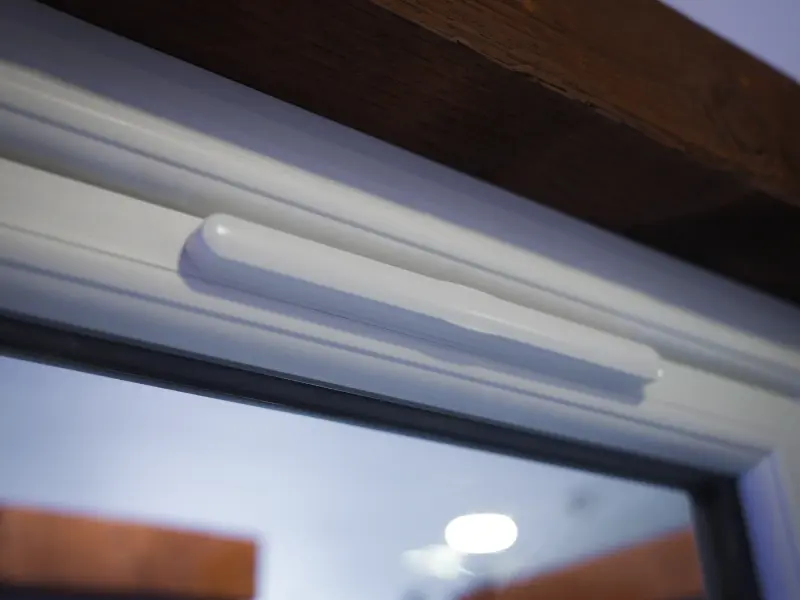
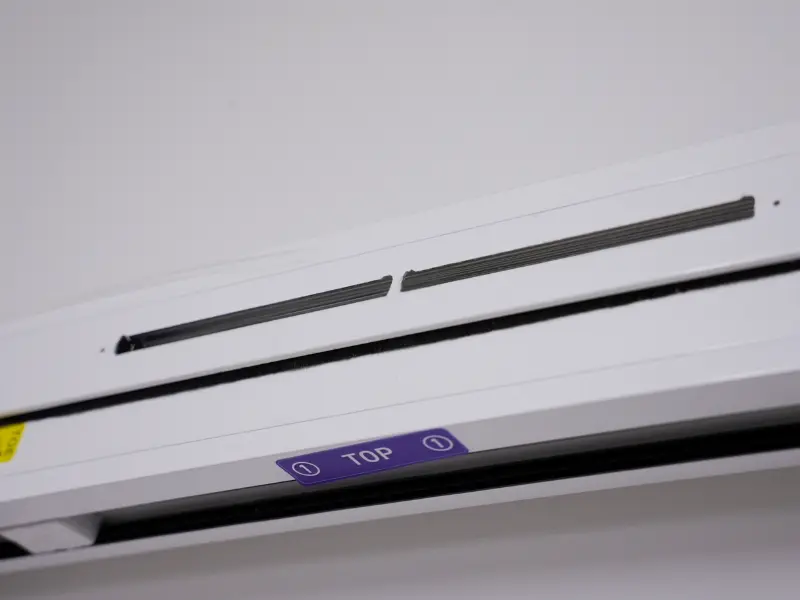
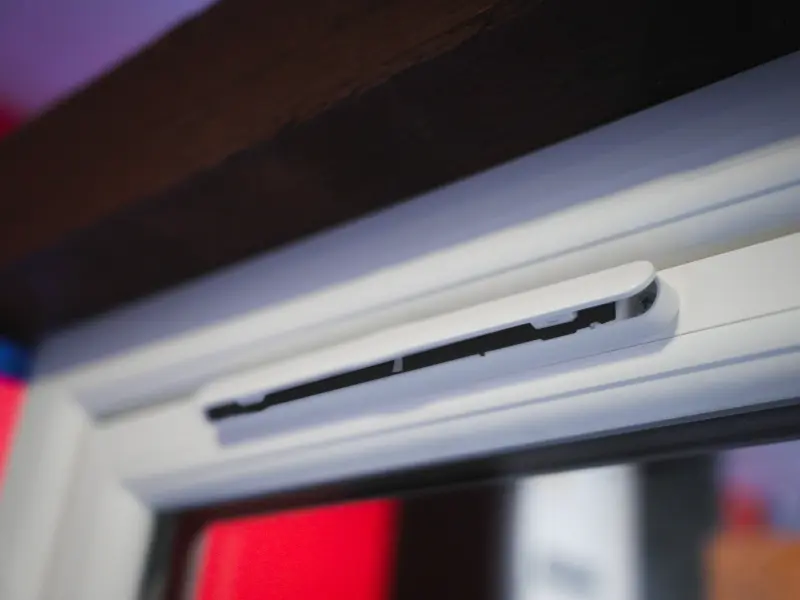
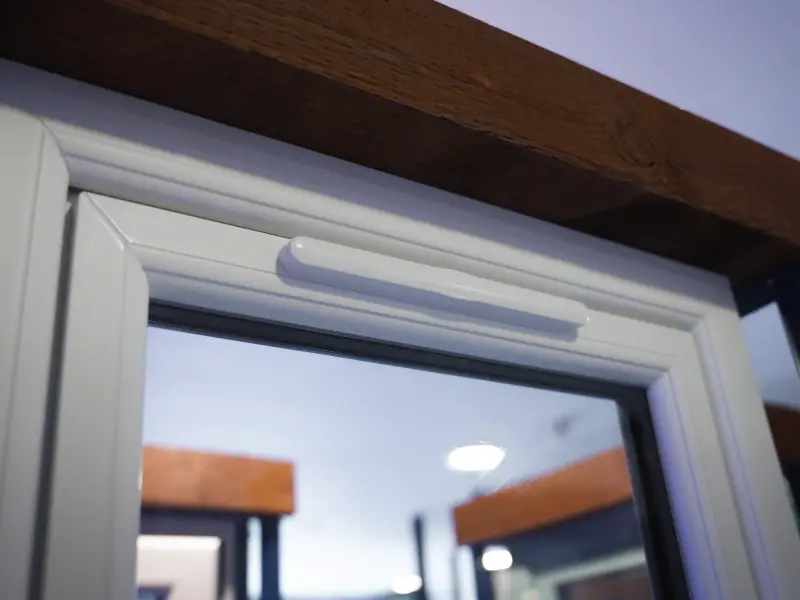
Trickle vents allow a small amount of outdoor air to enter through a ventilator usually positioned near the top of a window or door. On the inside, a sliding or hinged cover lets you adjust the opening. On the outside, a hood or grille helps limit wind-driven rain and insect entry. The exact design varies by product.
When used with suitable extraction ventilation, trickle vents help maintain healthy indoor environments and can reduce condensation and mould. For these reasons, the Building Regulations have highlighted the importance of trickle vents in recent years.
Important Note: A night-vent or night-latch setting is not a recognised substitute for background ventilation under Approved Document F. A window locked slightly ajar does not provide a sufficiently secure alternative.
Do I Need Trickle Vents in My Windows and Doors?
In many cases, yes. Most replacement windows and doors in England need suitable background ventilation, often provided by trickle vents.
Part F of the Building Regulations requires suitable ventilation when windows or doors are installed or replaced in England. Modern, more airtight products can reduce uncontrolled airflow, so it is important to check that adequate background ventilation is maintained. Requirements for non-domestic buildings are different.
Do I Need Trickle Vents on Every Window?
Not necessarily. Ventilation needs to be assessed for the room and the property, rather than assuming every individual window must have a vent. The required total equivalent area and the position of any ventilators still need to be appropriate for the installation.
However, whether trickle vents are needed in the new window itself depends on the property and its existing ventilation.
An alternative approach may be appropriate where:
- You have an MVHR system - A properly designed mechanical ventilation with heat recovery system provides adequate whole-home ventilation without relying on window trickle vents.
- You have suitable wall vents - Existing wall ventilators can be an alternative if they provide the required equivalent area. Vents intended only for appliance combustion must not be counted as Part F background ventilation.
- You live in a historic property - Listed buildings and some historic properties may require a different approach to protect their character. This should be agreed with the relevant authority; an exemption should not be assumed.
- You're repairing, not replacing - Repair work that does not reduce existing ventilation may be treated differently from a window or door replacement. Check the requirements for the work being undertaken.
Important Note: These are not automatic exemptions. The ventilation arrangement and any alternative route to compliance should be checked before ordering or installation.
Unsure if you need trickle vents?
- If you're installing the windows or doors yourself, check the requirements with your local authority building control team or a suitably qualified professional before ordering.
- If you're using a professional installer, discuss the ventilation requirements during the survey so the correct vents or alternative arrangements can be specified.
You can find more information about exemptions and rules in the official government-provided Approved Document.
What Are the Benefits of Trickle Vents?
Trickle vents support indoor air quality by introducing a small amount of background airflow. Their main benefits include:
They Provide Fresh Air Without Opening Windows
Opening windows can help freshen a room, but it isn't always practical in cold or wet weather. Modern windows are also designed to reduce uncontrolled draughts when closed, making planned ventilation particularly important.
Trickle vents can provide a small, controllable flow of fresh air while windows remain closed. This helps dilute everyday indoor pollutants, although introducing outside air can result in some heat loss.
They Help to Minimise Moisture Build-Up
Condensation can form when warm, moisture-laden indoor air meets a colder surface, such as a window pane or wall. Persistent condensation, together with insufficient ventilation and other conditions, can encourage mould growth.
Trickle vents can help remove excess moisture and reduce the risk of condensation and mould, particularly alongside suitable extraction in kitchens and bathrooms. They cannot guarantee a particular humidity level or prevent condensation on their own. Heating, insulation and sources of moisture also play a part.
They Allow Ventilation While Windows Stay Closed
Trickle vents can provide background airflow without leaving windows on their night-latch setting. This means the windows can remain closed and locked while the vents are open.
- Keep windows closed - Trickle vents offer a way to ventilate without leaving an opening window partly ajar.
- You can leave them unattended - Background airflow can continue during normal use without having to leave a window open. Follow the security and operating instructions for your chosen window and vent.
Should Trickle Vents Be Open All the Time?
Generally, trickle vents should be left open to provide the background airflow they were designed for. Check the manufacturer's instructions and your home's ventilation design before closing them for long periods. You may occasionally need to adjust them:
- During severe driving rain, where the vent instructions recommend temporarily closing them.
- If outside noise is particularly disruptive (an acoustic ventilator may be an option in some installations).
- For short periods if a room feels uncomfortably draughty.
If a room feels consistently draughty, check the vent setting and the condition of the window seals. Trickle vents admit some outside air by design, but draughts can also come from gaps or damaged seals.
Do Trickle Vents Let In Cold Air or Noise?
Because trickle vents create a path for outdoor air, some cooler air and external noise can enter a room. The amount depends on the vent design, position and outside conditions. Where road noise is a concern, ask whether a suitable acoustic ventilator or alternative ventilation arrangement is available before ordering.
Are There Different Types of Trickle Vents?
Trickle vents vary in how they are fitted and how they control airflow. The right option depends on the window or door system, the ventilation requirement and available fitting space.
Common Vent Positions
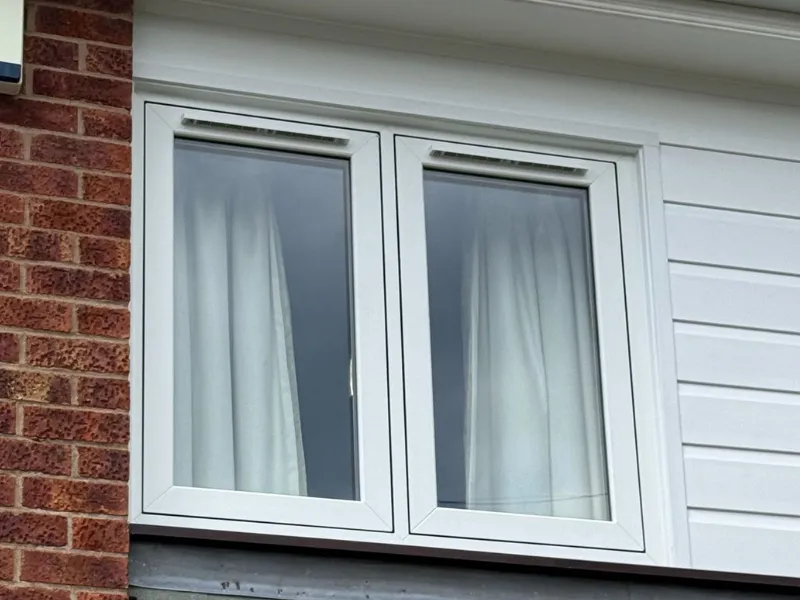
- Through-Frame Vents Through-frame vents are fitted through a suitable part of the window frame or opening sash. They usually have an internal control and an external hood or grille.
- Over-Frame Vents Over-frame vents sit above or over the head of the window frame instead of being fitted through the opening sash. They can be used where the window system and available clearance make an over-frame arrangement appropriate. Compatibility should be confirmed before ordering.
- Glazed-in Vents Glazed-in vents are incorporated near the top of a glazed opening, using a compatible glazing arrangement. They are not suitable for every window and may affect the visible glass area.
Other Vent Features
- Manual / Slot Vents Manual slot vents use sliders or flaps to let you adjust the background airflow.
- Acoustic Vents Acoustic vents are designed to reduce the transmission of outside noise while allowing ventilation. They may be useful near busy roads, subject to product compatibility.
- Link Vents Some directional vents, including Link-Vent designs, direct incoming air upwards to reduce the sensation of cold draughts.
- Humidity-Sensitive Vents Some humidity-sensitive ventilators use moisture-responsive components to adjust their opening automatically. Others use electronic controls. The suitable type depends on the ventilation system and product specification.
What Size Trickle Vent Do I Need?
The right vent depends on the window or door design and the amount of background ventilation required. Its Equivalent Area (EA) rating is especially important because it describes its tested ventilation performance, expressed in mm².
A vent's slot length or overall dimensions do not, by themselves, tell you how much ventilation it provides. The vent design and dimensions both influence the resulting EA rating.
Under Approved Document F, the appropriate EA depends on factors such as:
- The room's purpose (for example, bedroom, kitchen or bathroom).
- Whether you are fitting replacement windows or working on a new home, and the ventilation system in use.
- The number, position and rated equivalent area of the available ventilators.
For replacement windows in existing homes in England, the guidance in Approved Document F of the Building Regulations sets out the following minimum EAs for one common route to compliance where appropriate background ventilators are being provided. These figures are not a universal rule for every project:
| Room type (replacement windows) | Indicative minimum EA |
|---|---|
| Habitable rooms | 8,000 mm² |
| Kitchens | 8,000 mm² |
| Bathrooms (with or without a toilet) | 4,000 mm² |
| Other ventilation systems | Different requirements may apply |
For example, two trickle vents rated at 4,000 mm² EA each provide a combined Equivalent Area of 8,000 mm². The number and size of vents required will depend on your room and property's ventilation requirements.
Important Note: This table summarises guidance for replacement windows in existing dwellings in England where the specified background-ventilator route applies. If the existing windows already have vents, replacements should generally provide at least the same equivalent area. New builds and properties with other ventilation systems may have different requirements.
Scotland, Wales and Northern Ireland have different technical guidance. Check the rules applying to your installation and confirm the required ventilation before placing an order.
Can I Retrofit Trickle Vents Into My Doors and Windows?
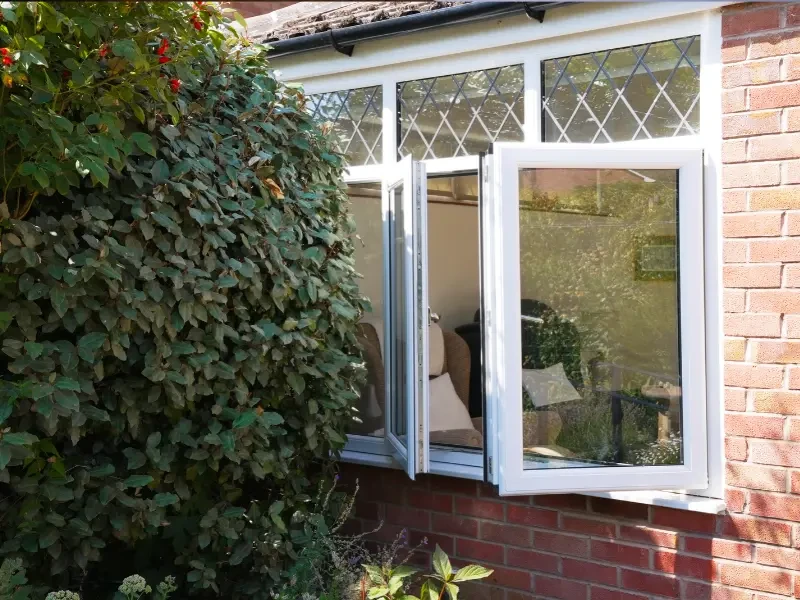
It is sometimes possible to retrofit trickle vents into existing windows or doors, but suitability depends on the frame design. There are several points to consider before drilling or routing:
- Steel Reinforcement - Many UPVC frames and sashes contain reinforcement, which can make cutting into the profile difficult or unsuitable without manufacturer approval.
- Loss of Structural Integrity - Cutting in the wrong position could affect the window's strength, drainage or weather sealing. Incorrectly formed openings may also cause unwanted draughts or water ingress.
- Voided Warranties - By cutting into your window or door, you risk voiding your manufacturer warranty.
- Tight Access - If your window or door fits tightly against the internal plaster reveal, there may not be enough clearance to drill or route the opening correctly.
For these reasons, we do not recommend retrofitting trickle vents yourself without the manufacturer's guidance. Replacing a removable cover is simpler, but incorrectly cut openings are difficult to remedy.
How to Install a Trickle Vent
Watch our step-by-step video guide to see how a trickle vent is installed. Always check that your window or door is suitable before attempting any modifications.
Are Trickle Vents Easy to Clean?
Yes, trickle vents are generally very easy to clean, and you only need a few household tools to do it.
Check trickle vents regularly and clean them whenever dust or debris builds up. A six-monthly check is a useful starting point, or more frequently if you live in a particularly dusty area.
How to Clean Trickle Vents
The best cleaning method depends on the type of debris and the manufacturer's instructions:
- Dust & Cobwebs - Open the vent flap and run a duster, pipe cleaner, or brush attachment from your vacuum along the slots. Doing this will easily dislodge and collect the debris.
- Grease & Grime - Wipe the inside cover and surrounding frame with a soft cloth dampened with mild, soapy water. Only remove clip-on parts if the manufacturer's instructions allow it, and dry them completely before refitting.
- Exterior Mesh - If your vent has an accessible external mesh or grille, gently remove dust. Only remove the cover for washing if the manufacturer says it is safe to do so.
What Not to Do
- Do not use spray cleaners or force water into the vent opening or window frame.
- Avoid abrasive cleaners and solvents.
- Do not force a stiff or stuck sliding mechanism. Check the manufacturer's instructions if the control will not move freely.

Do Modern UPVC Windows Products Include Trickle Vents?
Yes, we provide the option to add trickle vents to all applicable products on our designer tool. We supply Glazpart Link-Vents on applicable UPVC products, available in three sizes: 2,500 mm², 4,000 mm² and 5,000 mm² Equivalent Area (EA). The vent type, availability and position depend on the window or door configuration, so confirm the ventilation requirement for your installation before choosing.